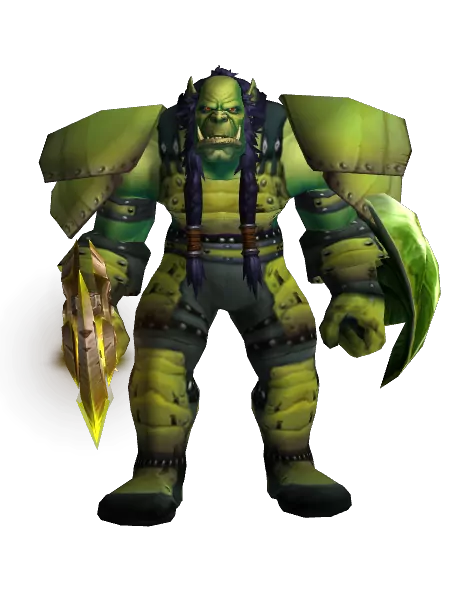
Why choose Orc?
Orc is an aggressive Horde option with axe skill, pet damage, an attack-power cooldown and unusually strong stun resistance.
Available classes
Warrior, Hunter, Rogue, Shaman, Warlock.
Strong natural matches: Warrior, Hunter, Shaman and Warlock. This is guidance, not a restriction—every available combination can complete Classic content.
Racial abilities
| Racial | What it does | Where it matters |
|---|---|---|
| Blood Fury | Temporarily increases base melee attack power and reduces healing received by 50% | Physical burst with a real defensive cost |
| Hardiness | Chance to resist stun effects increased by an additional 25% | Powerful passive PvP defence |
| Command | Hunter and Warlock pet damage increased by 5% | Pet-class damage |
| Axe Specialization | Axe skill increased by 5 | Warrior and Shaman weapon optimisation |
How Orc feels to level
Blood Fury speeds difficult physical fights but reduces healing received, so it should not be pressed automatically before every dangerous pull. Command adds steady value to Hunter and Warlock pets.
PvE
Axe Specialization has the same endgame weapon-skill importance that Human sword and mace skill has. Blood Fury is useful physical burst, while its healing penalty requires timing around incoming damage.
PvP
Hardiness gives Orcs a 25% additional chance to resist stuns, one of the strongest passive PvP racials in Classic. Blood Fury adds pressure but can turn into a liability when focused.
Does race choice decide your character?
No. Racials influence optimisation and create useful moments, but class knowledge, gear, professions, encounter preparation and whether you enjoy the character matter more for most players. Choose optimisation when you value it; choose identity when that keeps you playing.